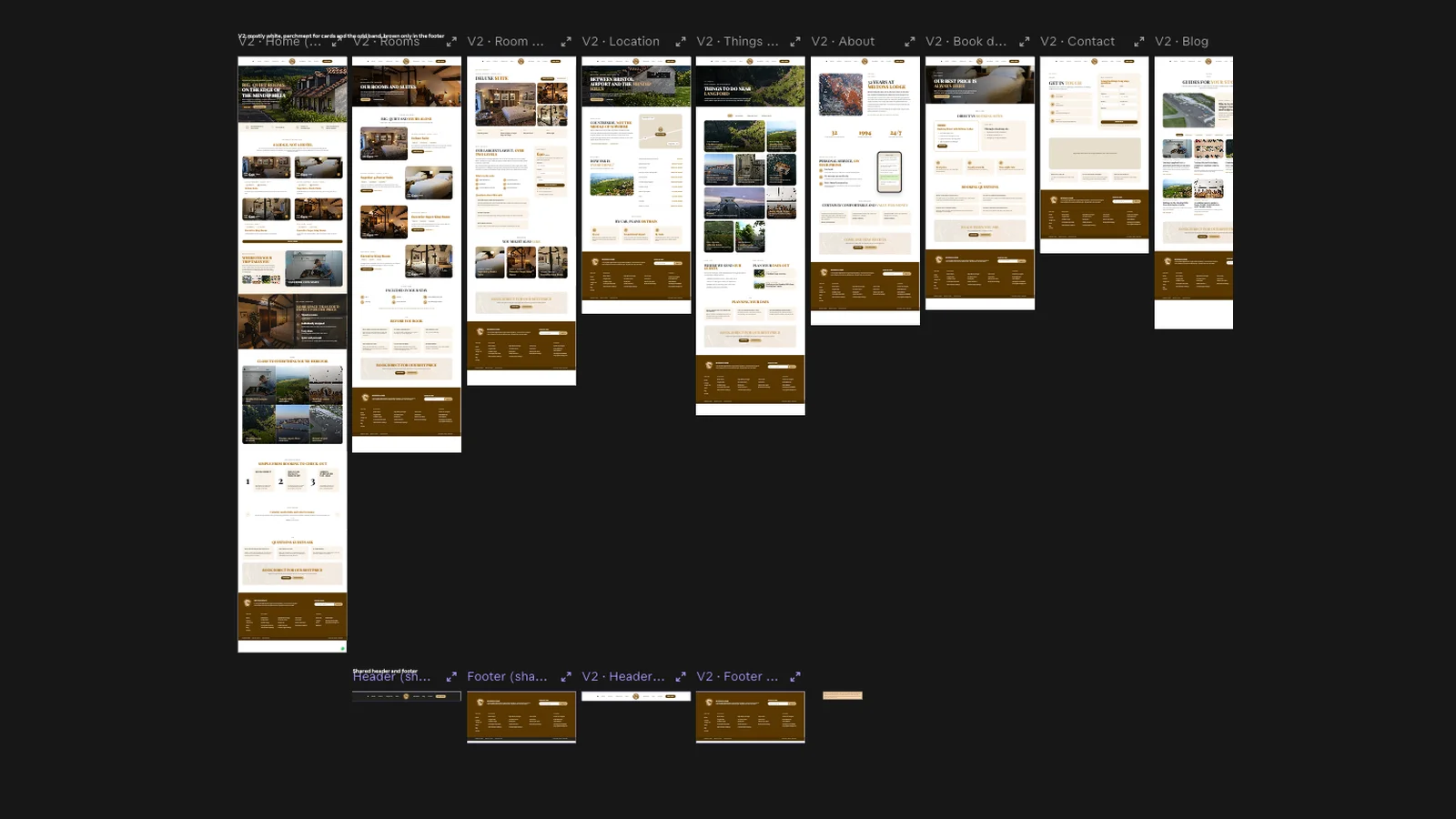
Today my designer Ira and I took a client website from a finished homepage design to a complete site on a staging link in about 90 minutes. That time includes every edit and adjustment along the way. The client was Miltons Lodge, a lodge in Langford near Bristol Airport, and the tool doing the building was Claude, Anthropic's AI model, connected to our GitHub and our own hosting. We delivered the project in collaboration with Smart Secretary.

The speed is the headline, but it isn't the most useful part. The useful part is how we ran the session. Claude was the executor and we were the drivers. We know what a good website needs, so we used AI to get there faster, not to decide what "good" looks like.
What did we start with?
Miltons Lodge has a lot of history. The building was Milton's Country Lodge, and the owner is giving it a new life. The old round "Milton's 1994" badge logo had already been modernised, and Ira had designed the homepage in the brand's warm autumn palette: gold, black, white, brown and beige.
So we walked in with three things:
- A signed-off homepage design
- A brand with a clear feel (warm, lodgy, a bit of heritage)
- A clear goal for the site: get people to book a stay
That last point matters more than anything else. A website with no clear job ends up as a nice-looking brochure.
How does the workflow work?
Every site we build now lives in its own GitHub repository and deploys from GitHub to our hosting. Each time a change is saved to the main branch, the staging site updates on its own. We've written up the full setup in how modern websites should be built in the AI era.
The session looked like this:
- Brief Claude properly. We gave it the homepage design, the brand colours and fonts, the pages the site needs, and what each page has to achieve.
- Build the homepage first, then hold it up against the design. Ira compared it section by section and called out what was off: spacing, type sizes, image crops, button styles.
- Roll the design system out to every page. Once the homepage matched, the other pages used the same colours, type, buttons and spacing, so they felt like one site from the start.
- Review on staging, edit, review again. We clicked through the staging link on desktop and phone, wrote down what needed changing, and gave Claude the list. Each round took minutes rather than days.
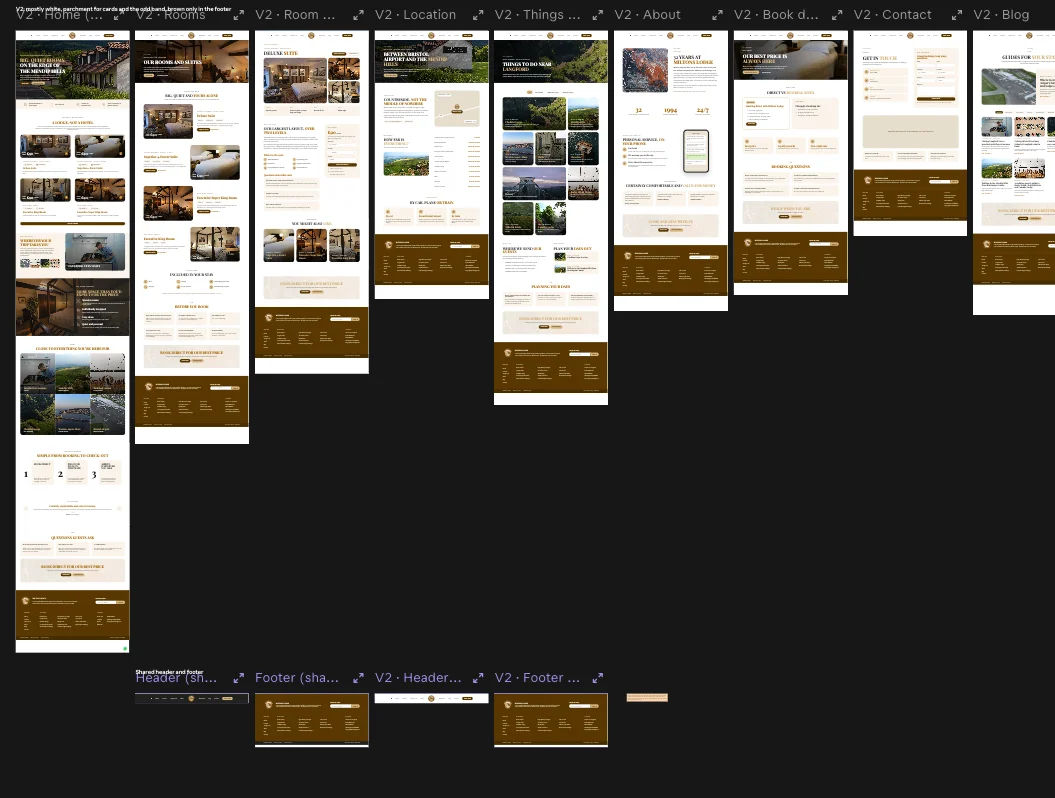
No design files were thrown "over the wall" to a developer and no one waited for a build. The designer and the person directing the project sat with the site as it took shape.
Why was Claude the executor, not the driver?
This is the bit most people get wrong with AI website builders. Type "make me a hotel website" and you get a website. It will look fine. It will also look like every other AI-made hotel website, and it won't know what your guests care about.
We never asked Claude what the site should be. We told it. Ira decided how the design should look and feel. I decided what each page needed to do for the business and in what order. Claude turned those decisions into working code, quickly and without getting tired of the twentieth "move this up a bit".
That split is where the speed comes from. The slow part of a website used to be the gap between deciding something and seeing it on screen. That gap is now about a minute, so we can spend our time on the decisions themselves.
What checklist did we hold it to?
A fast website that misses the basics isn't worth much. Before we called it done, we went through the same list we use on every build:
- One clear action per page. Every page leads towards booking a stay.
- Mobile first. Most hotel and lodge visitors browse on their phones, so we reviewed every page at phone size, not just desktop.
- Design consistency. The same colours, type, buttons and spacing on every page, matching Ira's design.
- SEO foundations. A proper page title and meta description on every page, one H1 per page, a sensible heading order, and descriptive alt text on images.
- Speed. Compressed, modern image formats so pages load quickly on a phone signal.
- Readability and accessibility. Text contrast that holds up on the dark and gold sections, and buttons big enough to tap.
- Local details. The lodge's location and what's nearby, written for people searching for somewhere to stay near Bristol Airport.
Claude can do every item on that list. It just won't hold itself to all of them unless someone who knows the list is checking.
What's left before launch?
The site is on staging, not live. Two jobs are still to come: connecting the Book Now buttons to the lodge's booking system, and pointing the domain at the new site with the right redirects so the old site's search rankings carry over.
We'd rather do those properly than rush them to make the launch day look tidier.
What does this mean for our clients?
Websites used to take us around six weeks. With this way of working, a standard build now takes two to four weeks, and most of that time goes on the things that make a site good: the brief, the content, the design and the review rounds.
It also changes what happens after launch. Because every site lives in code on GitHub, changes are quick to make and every version is saved. Our clients aren't locked into a page builder or a pile of plugins. More on that in why we're moving away from WordPress.
Frequently asked questions
Can Claude build a website on its own?
Claude can write the code for a full website from a description. Whether that website is any good depends on the person directing it. In our experience the best results come from treating Claude as a fast, careful builder and keeping a designer and a strategist in charge of the decisions.
Do you still need a web designer if you use AI?
Yes. On the Miltons Lodge build, Ira's homepage design set the standard every other page had to meet. AI made it faster to apply her design across the site, but it didn't replace the design.
How long does it take to build a website with Claude?
For us, going from a finished homepage design to a full multi-page site on staging took about 90 minutes, edits included. The whole project, from brief to launch, still takes two to four weeks, because the brief, the content and the final checks are where the quality comes from.
If you're in a rush and everything is ready to go (the brief, the content, the photos and the brand), we can launch a full website within five working days.
Want a website built this way?
If you'd like a site that's fast to build, easy to change and designed around what your business needs, we'd love to hear about it. See how we design websites or start a project and tell us what you're working on.
Ardjuna founded Flow Digital, a marketing agency in Bali that runs websites, ads, SEO and email for businesses in Asia, Australia and Europe. He also built Metrcs, the software the agency runs on.